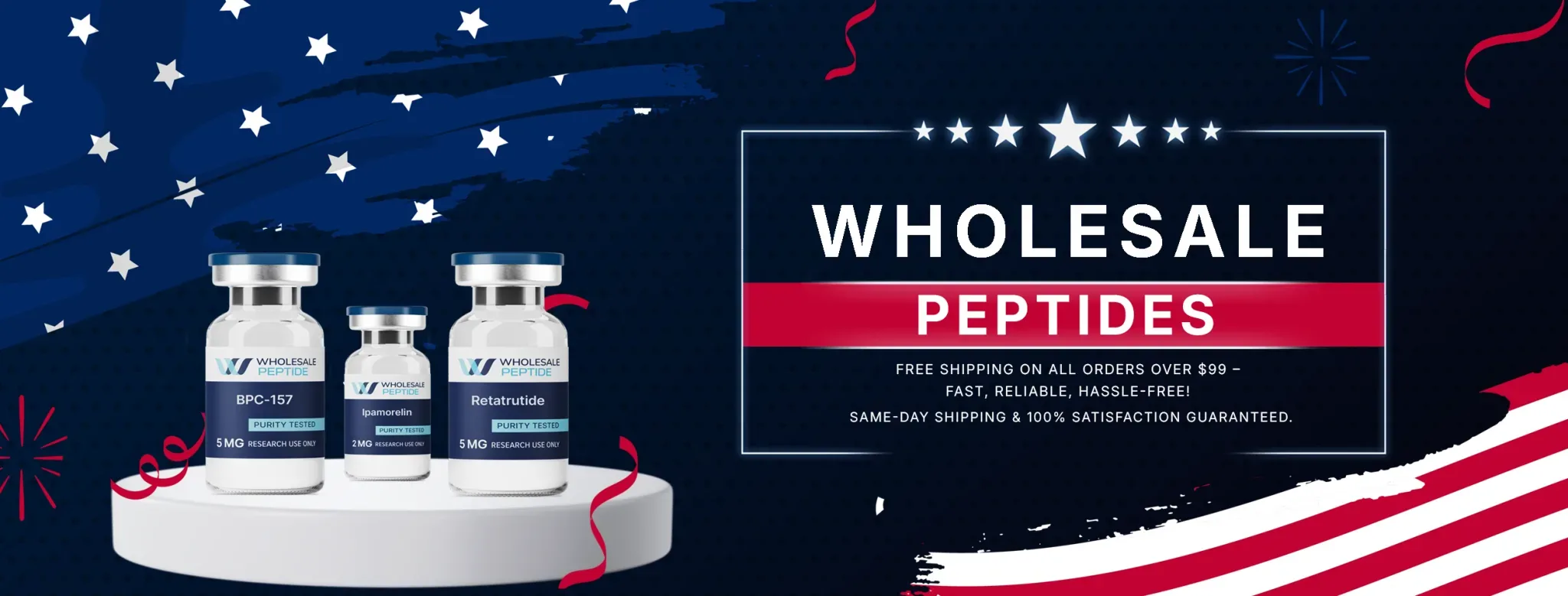
Wholesale Peptide Suppliers Guide 2026 — Complete Bulk Supplier Overview
This wholesale peptide suppliers guide explains how research buyers evaluate trusted peptide suppliers, compare bulk pricing systems, review GMP manufacturing standards, and verify COA documentation before placing large-volume orders.
The global peptide market continues expanding as research laboratories, distributors, longevity companies, universities, and scientific organizations seek scalable peptide sourcing solutions with consistent inventory and transparent analytical testing.
Modern wholesale peptide suppliers operate structured inventory systems designed for long-term procurement workflows. Buyers commonly evaluate manufacturing transparency, documentation systems, shipping reliability, and analytical testing procedures before selecting a supplier.

Table of Contents
- Wholesale Peptide Supplier Overview
- Bulk Peptide Inventory
- Bulk Pricing Structures
- GMP Manufacturing Standards
- COA Testing & Quality Verification
- Cold Chain Shipping Systems
- Supplier Verification Process
- Long-Term Wholesale Supply Agreements
- FAQ
wholesale peptide suppliers Overview
The wholesale peptide suppliers market supports organizations requiring larger-volume peptide procurement for research and analytical purposes. Suppliers typically offer catalog-based ordering systems with multiple vial sizes, packaging formats, and inventory tiers.
Many buyers prioritize transparency and supplier consistency before establishing recurring purchasing relationships. Analytical testing access, inventory stability, and structured ordering workflows are considered essential components within the wholesale peptide industry.
Trusted suppliers often maintain detailed product listings that include:
- Batch identification systems
- Third-party testing access
- Purity analysis documentation
- Inventory availability indicators
- Cold-chain logistics support
- Institutional ordering workflows
Research buyers frequently compare multiple wholesale peptide suppliers before selecting a sourcing partner for long-term procurement.
Bulk Peptide Inventory
A professional peptide wholesale supplier typically maintains a broad inventory of research compounds available in different concentrations and packaging configurations.
Structured product catalogs allow buyers to compare inventory specifications while reviewing analytical documentation and supplier information.
- Tirzepatide wholesale supply
- Semaglutide bulk inventory
- BPC-157 wholesale peptides
- TB-500 bulk supply
- GHK-Cu peptide inventory
- CJC-1295 wholesale stock
- Ipamorelin peptide supply
- MGF peptide inventory
- MOTS-c wholesale supply
- Retatrutide bulk inventory
Most wholesale peptide suppliers maintain year-round inventory systems designed to support recurring institutional purchasing requirements.
Inventory consistency is considered important for laboratories and distributors that require reliable sourcing over extended procurement cycles.
Bulk Pricing Structures
Wholesale peptide pricing models vary depending on order volume, packaging size, inventory conditions, and long-term purchasing agreements.
Many suppliers use tiered pricing structures where larger orders receive lower per-unit pricing.
- Volume discount systems
- Institutional pricing tiers
- Distributor supply agreements
- Recurring order discounts
- Bulk packaging incentives
Research organizations commonly compare pricing across multiple wholesale peptide suppliers before selecting a preferred sourcing partner.
Transparent pricing systems help buyers forecast procurement budgets while maintaining inventory planning efficiency.
Some suppliers also provide:
- Custom bulk packaging
- Large-scale inventory reservations
- Priority fulfillment systems
- Dedicated institutional support
GMP Manufacturing Standards
GMP (Good Manufacturing Practice) standards are commonly referenced when evaluating peptide manufacturing and packaging systems.
Many buyers review supplier manufacturing procedures to assess operational consistency and quality control systems.
GMP-related considerations may include:
- Controlled manufacturing environments
- Documented quality control procedures
- Batch tracking systems
- Environmental monitoring systems
- Standardized packaging workflows
- Inventory traceability systems
Structured manufacturing standards help support consistency across large inventory cycles.
Buyers evaluating wholesale peptide suppliers often prioritize suppliers with transparent operational procedures and documented manufacturing systems.
COA Testing & Quality Verification
COA (Certificate of Analysis) verification is one of the most important components within the wholesale peptide market.
Analytical testing documentation allows buyers to review batch-specific laboratory results before approving purchases.
- HPLC purity analysis
- Mass spectrometry verification
- Identity confirmation testing
- Third-party laboratory analysis
- Lot-specific testing reports
Most professional wholesale peptide suppliers provide analytical documentation for inventory verification and transparency.
Research buyers commonly review testing documentation to confirm consistency across multiple procurement cycles.
Transparent testing systems are often considered essential for establishing long-term supplier relationships.

Cold Chain Shipping Systems
Cold-chain logistics systems are commonly used for temperature-sensitive peptide inventory.
Many suppliers implement insulated packaging systems designed to maintain product stability during transit.
- Temperature-controlled packaging
- Insulated shipping materials
- Tracking systems
- Expedited fulfillment workflows
- Inventory protection procedures
Reliable shipping systems are often considered important when evaluating wholesale peptide sourcing operations.
Research organizations frequently prioritize suppliers with established fulfillment and logistics procedures.
Supplier Verification Process
Evaluating supplier legitimacy is a major part of the wholesale procurement process.
Buyers often verify multiple operational indicators before establishing recurring purchasing agreements.
- Business verification systems
- Transparent documentation access
- Consistent inventory availability
- Testing record transparency
- Responsive institutional support
- Structured ordering workflows
Professional wholesale peptide suppliers generally maintain organized procurement systems that support institutional and research purchasing requirements.
Long-term sourcing relationships often depend on inventory consistency, operational transparency, and documented quality procedures.
Long-Term Wholesale Supply Agreements
Large-volume buyers frequently establish recurring supply agreements with peptide suppliers to support consistent procurement operations.
Long-term agreements may include:
- Reserved inventory allocations
- Scheduled recurring shipments
- Priority fulfillment systems
- Institutional account management
- Volume-based pricing agreements
Structured supplier relationships help improve procurement efficiency and inventory planning.
Research buyers often prioritize dependable wholesale peptide suppliers capable of supporting scalable ordering systems and transparent operational standards.
Explore wholesale categories and products: Buy Peptides | Semaglutide Wholesale | TB-500 Wholesale | MGF 2mg Supplier
FAQ
What are wholesale peptide suppliers?
Wholesale peptide suppliers are companies that provide research peptides in larger quantities to laboratories, distributors, and institutional buyers.
Why do buyers compare multiple suppliers?
Buyers often compare pricing, inventory consistency, analytical testing systems, and operational transparency before selecting a supplier.
What is GMP?
GMP stands for Good Manufacturing Practice and refers to structured operational and quality control procedures.
What is a COA?
A Certificate of Analysis is a laboratory document confirming product identity and purity testing results.
Why is HPLC testing important?
HPLC testing helps verify peptide purity and batch consistency.
How does wholesale pricing work?
Wholesale pricing generally decreases as order quantity increases.
What are institutional supply agreements?
They are recurring procurement arrangements between suppliers and large-volume buyers.
Why is cold-chain shipping important?
Cold-chain logistics help maintain stability for temperature-sensitive inventory during transit.